
AI Stock Analysis on GitHub: What DIY Scripts Get Right (and Where They Fall Short)
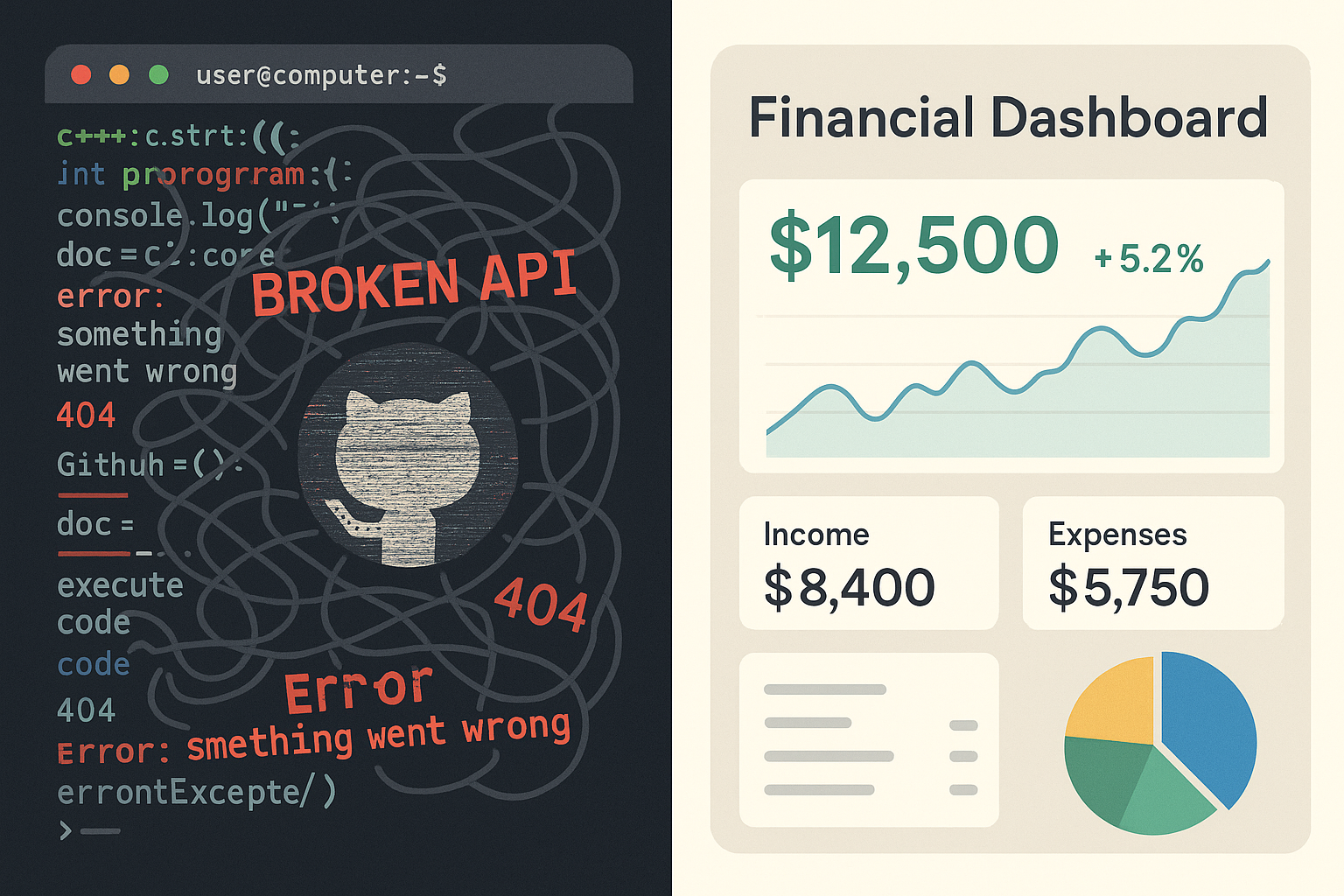
Search "ai stock analysis github" and you'll find hundreds of repositories: sentiment scrapers, LLM-powered earnings summarizers, backtesting frameworks, screener scripts. It's an exciting corner of the open-source world, and it exists for a good reason — individual investors want the kind of research firepower that used to be locked behind a Bloomberg terminal, and Python plus a language model API key feels like a reasonable way to get there.
We build research software for a living, so we spend a lot of time in this space. Here's an honest look at what these projects get right, where they tend to break down, and why the gap between "a clever script" and "a tool you can actually rely on" is wider than it looks.
Why AI Stock Analysis GitHub Projects Are So Appealing
The pull is easy to understand:
- They're free (up front). No subscription, just your own compute and API costs.
- They're transparent. You can read the code and see exactly what it's doing — at least in theory.
- They're customizable. Want to weight free cash flow more heavily than the default script does? Fork it and change a line.
- They lower the barrier to entry. A retail investor with basic Python skills can prototype something that looks and feels sophisticated in an afternoon.
That combination — free, transparent, hackable — is genuinely valuable, and it's why this ecosystem keeps growing. The instinct behind it is correct: investors deserve better tools than a stock-tip forum and a spreadsheet.
Where the Cracks Show Up
The problem isn't the idea. It's what happens after you git clone the repo and start actually using it for decisions involving real money.
1. Data reliability is rarely guaranteed
Most of these projects pull financial data from a mix of free APIs, scraped pages, and whatever endpoint was easiest to wire up at the time. That data source can change its format, get rate-limited, or quietly go stale — and the script has no way of telling you that happened. You might be looking at a P/E ratio calculated from last quarter's numbers without any indication that anything is wrong.
2. AI claims without a paper trail
A lot of these tools ask a language model to "analyze" a stock and summarize its outlook. The output reads confidently. But if you ask which specific filing, metric, or data point led to that conclusion, the honest answer is usually: nobody knows, including the model. Without a direct link between an AI-generated claim and the underlying source data, you're trusting a black box wrapped in a nicer black box.
3. Maintenance is a part-time job nobody signed up for
Open-source scripts are usually built by one person, for one person, and shared afterward. When the maintainer moves on to a different project — which happens constantly — the repo stops getting updated. APIs deprecate. Dependencies break. You either learn to patch it yourself or you stop using it. That's a fine trade-off for a weekend hobby project; it's a risky one for something informing your portfolio.
4. No standardized way to test an idea
Many repos include a backtest script, but they vary wildly in rigor — different rebalancing assumptions, different survivorship-bias handling, different definitions of "the strategy." Comparing results across two different GitHub projects is often like comparing apples to a spreadsheet error.
What a Maintained Alternative Looks Like
This is exactly the gap Compounder is built to close: the DIY spirit of open-source stock analysis, backed by data you can actually verify and infrastructure you don't have to maintain yourself.
Every AI claim ties back to a source
Instead of a language model summarizing a stock in the abstract, Compounder grounds every AI-generated insight in a specific data point from our ingested financial data. If a claim references revenue growth or margin trends, you can trace it back to the underlying figures — no guessing where the number came from.
A real backtesting engine, not a one-off script
The Stock Strategy Backtester lets you configure and run historical tests of stock-selection strategies with the same rigor every time. You choose:
- A memorable name for your test
- A strategy type — Compounder Score top N%, Buffett quality scoring 70+, or Graham net-net undervalued
- A historical date range (minimum 90 days)
- A rebalance frequency (Monthly, Quarterly, or Yearly)
- The percentage of the universe to include
Because the methodology is consistent and built into the product, you're testing an actual strategy definition — not reverse-engineering assumptions buried in someone else's code.
A browsable, filterable universe instead of a scraped list
The Browse Stocks page shows every company in our covered universe — meaning companies with ingested, structured financial data, not just whatever a scraper managed to pull that day. You can filter by:
- Ticker, company name, or partial match, with results updating as you type
- Sector
- Market cap — Mega cap (>$200B), Large cap ($10B–$200B), Mid cap ($2B–$10B), and beyond
That structure matters. A DIY script might get you a list of tickers; a maintained universe gets you a consistently defined dataset you can actually build a research process around.
Tracking ideas as you find them
One small but useful detail: anywhere you see a + Follow button — on a stock card, sector card, or theme card — you can click it to immediately add that item to your Following list. You don't have to stop what you're doing and navigate to a separate page first. It's a small thing, but it reflects a broader philosophy: research tools should fit into how you actually think, not force you to context-switch every time you spot something interesting.
The Real Trade-Off
GitHub-based AI stock analysis projects prove there's real demand for institutional-grade research in the hands of individual investors. That instinct is right. What's harder to DIY is the unglamorous part: reliable data pipelines, source-verified AI output, rigorous backtesting standards, and someone who keeps the lights on when an API changes overnight.
If you like the spirit of open-source stock analysis — transparency, control, no black boxes — but don't want to become your own data engineer, that's precisely the problem Compounder was built to solve.