
AI Stock Analysis Tools: What They Actually Do (and Don't)
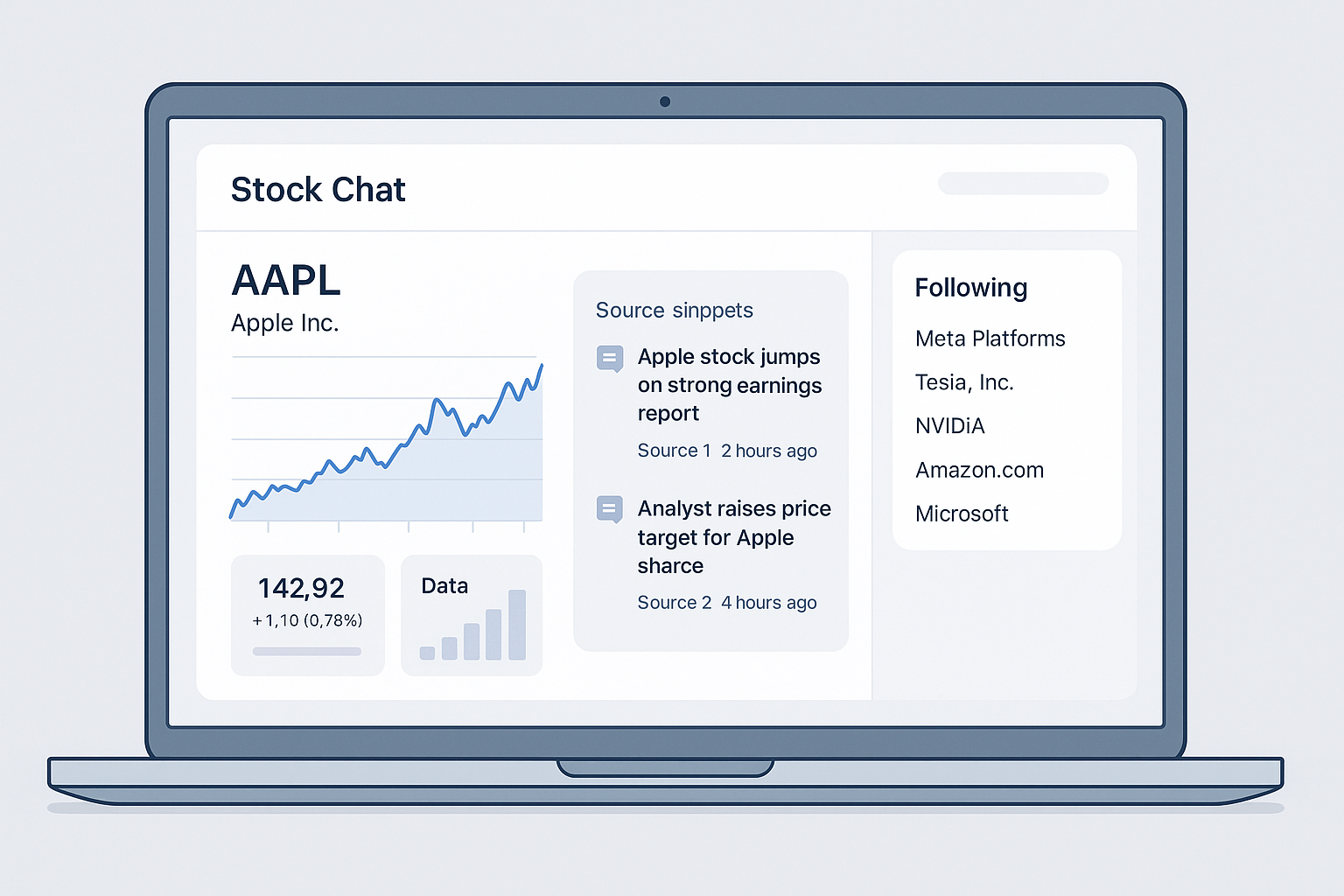
Every research platform seems to have an AI feature bolted on these days, and the marketing copy makes it sound like you can just ask a chatbot "should I buy this stock?" and get a reliable answer. That's not quite how it works — and understanding the difference matters if you're trying to build real conviction in a position.
An AI stock analysis tool is genuinely useful for research. It's not a replacement for judgment. Here's the honest breakdown of what these tools do well, what they don't, and how to use them without getting burned.
Two Different Jobs: Quick Answers vs. Deep Research
Most people lump "AI stock analysis" into one bucket, but in practice there are two very different modes of AI-assisted research, and they solve different problems.
Chat-Based Q&A
This is the fast, conversational layer. You ask a direct question — "What's this company's debt-to-equity trend look like?" or "How does this stock's margin compare to its sector?" — and you get a direct answer pulled from underlying financial data. It's built for speed: no digging through filings, no toggling between tabs, no manually calculating ratios.
Compounder's AI Analyst Chat works this way. It's designed to answer specific, well-scoped questions about a company using the data already in the platform. Think of it as a research assistant that already has the numbers open and can summarize them on demand.
The strength here is speed and accessibility. The limitation is scope — a chat answer is only as good as the specific question you ask, and it's not designed to synthesize a sprawling, multi-angle investment thesis in one shot.
Multi-Step Deep Research
This is a different animal. Instead of answering one question, a deep research mode breaks a broader question into steps — pulling data, cross-referencing it, and building toward a more complete answer, with sources cited along the way so you can verify the reasoning instead of just trusting the output.
This matters because the biggest risk with AI-generated financial content isn't that it's wrong — it's that it's confidently wrong with no way to check its work. A deep research approach that shows its sources turns the AI from an oracle into a research partner. You can see where a claim came from, whether it's a recent filing, a historical trend, or a calculated metric, and decide for yourself whether the logic holds up.
What AI Can Responsibly Answer
AI stock analysis tools are genuinely strong at:
- Summarizing structured financial data — margins, growth rates, valuation multiples, balance sheet trends
- Answering well-defined, factual questions quickly, without you having to dig through a 10-K
- Surfacing patterns across a large universe of companies faster than manual screening
- Explaining financial concepts in plain language, so you're not decoding jargon while trying to make a decision
These are exactly the tasks that used to require either a Bloomberg terminal, a paid analyst, or hours of manual spreadsheet work. Democratizing that layer of research is the actual value of AI in this space — not replacing your judgment, but removing the friction that used to gatekeep it.
What Still Needs Human Judgment
Here's where it gets honest. AI tools — even good ones with cited sources — are not equipped to:
- Weigh qualitative factors like management credibility, competitive moats, or industry shifts that aren't fully captured in the numbers
- Make a final buy/sell/hold call. AI can lay out the data; deciding what it means for your portfolio, your risk tolerance, and your time horizon is still on you
- Account for your personal context — your other holdings, your tax situation, your conviction level, your time horizon
- Predict the future. No AI tool, no matter how well-sourced, can tell you what a stock will do next quarter. It can only tell you what the data says right now and how that compares to history
The practical takeaway: use AI to compress the research phase, not to outsource the decision phase.
Grounding AI in Real Data, Not Guesses
AI answers are only as trustworthy as the data underneath them. This is why the research layer matters as much as the chat layer. Compounder's Browse Stocks page, for example, lets you filter the entire covered universe by sector, market cap, or ticker/company search — so before you even ask an AI question, you can see exactly which companies are in scope and what data actually backs them. That transparency is what makes a cited answer verifiable instead of just plausible-sounding.
Turning AI Insight Into a Repeatable Process
Asking good questions is only step one. The more useful workflow is turning what you learn into something testable and trackable:
- Backtest the idea, not just the stock. The Backtest tool lets you configure historical tests of actual selection strategies — Compounder Score top N%, Buffett-style quality scoring above 70, or Graham net-net value screens — over a custom date range (minimum 90 days) with monthly, quarterly, or yearly rebalancing. Instead of asking "is this a good stock," you can ask "has this type of strategy historically held up," which is a far more durable question than any single AI answer.
- Keep tabs on what you find. Any time you spot a stock, sector, or theme card worth watching, the + Follow button lets you add it to your Following list on the spot — no need to leave what you're doing to go set up tracking separately.
The Bottom Line
An AI stock analysis tool is at its best when it's fast, transparent, and honest about its limits — answering direct questions quickly through chat, and showing its work through cited, multi-step research when the question is bigger. What it shouldn't do is replace the judgment calls that come from understanding your own goals and risk tolerance. Use it to get to a well-informed decision faster. Just make sure you're still the one making it.