
Building a Stock Screener for Day Trading: Criteria That Matter
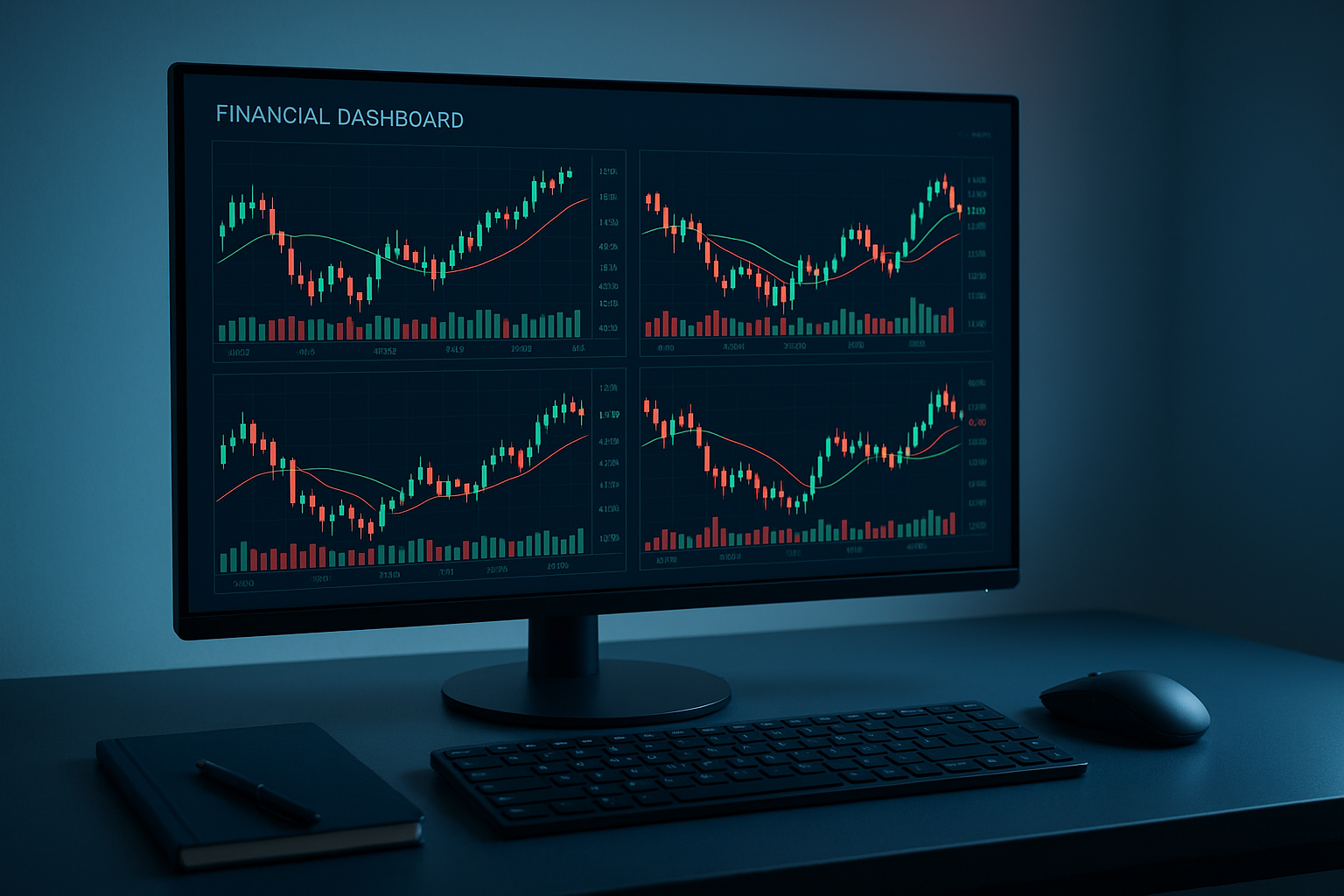
If you've ever typed "stock screener for day trading" into a search bar at 6 a.m. before the market opens, you already know the problem: most screeners are built for one job and asked to do another. A tool designed to find undervalued compounders isn't going to help you catch an intraday breakout, and a screener built for momentum trading is useless if you're trying to hold a position for five years.
Both are valid ways to invest. But they filter for almost opposite things. Understanding that difference — and knowing which criteria actually matter for each — will save you from building a screener that looks sophisticated but doesn't match how you actually trade.
What Makes a Good Day-Trading Screen
Day traders aren't trying to answer "is this a good business." They're trying to answer "will this stock move enough, with enough liquidity, in the next few hours, for me to get in and out profitably." That reframes the entire criteria list.
Volume: The Fuel
Without volume, nothing else matters. A stock can have a beautiful chart pattern and still be untradeable if there isn't enough liquidity to fill your order without moving the price against you. Day traders typically look for:
- Unusually high volume relative to the stock's own average (a "volume spike"), which often signals fresh news or institutional activity
- A minimum absolute share volume threshold, so the stock is liquid enough to enter and exit quickly
- Volume trends earlier in the session, since morning volume often predicts whether a move has staying power
Volume is the gatekeeper. It doesn't tell you which direction a stock will go, but it tells you whether the move is even tradeable.
Volatility: The Range
Volatility is where the profit opportunity actually lives. A stock that moves half a percent a day isn't interesting to a day trader, no matter how much volume it has. Common volatility filters include:
- Average true range (ATR) as a percentage of price, to normalize volatility across stocks of different prices
- Beta, as a rough proxy for how a stock moves relative to the broader market
- Recent gap size — how far a stock opened away from its previous close
The goal isn't chaos for its own sake. It's finding stocks with enough range to produce a meaningful move within the trading window you actually use.
Momentum: The Direction
Once you know a stock is liquid and volatile, momentum criteria help you decide if it's moving in a direction worth trading. This usually includes short-term price action relative to key moving averages, relative strength versus a sector or index, and confirmation from indicators like RSI or MACD. Momentum criteria are inherently short-horizon — what mattered yesterday often doesn't matter tomorrow, which is exactly why day-trading screens need to be re-run constantly rather than set once and forgotten.
Why Day-Trading Screens Look Different from Long-Term Screens
Here's the contrast that trips up a lot of newer investors: the criteria that make a stock exciting for a day trade often have nothing to do with whether it's a good long-term holding — and sometimes point the opposite direction.
A longer-horizon, quality-and-value screen asks different questions entirely: Is the balance sheet strong? Is the business generating real returns on capital? Is the stock cheap relative to its earnings or assets? These are the kinds of criteria behind approaches like Benjamin Graham's net-net valuation method or Warren Buffett's quality-focused framework — approaches built around holding periods measured in years, not hours.
Neither screen is "better." They're built for different jobs. The mistake is using one to answer the other's question — for example, buying a high-momentum breakout stock and holding it for a year based on the same criteria that got it onto a day-trading watchlist in the first place.
Where Compounder Fits: Building Your Own Research Workflow
Compounder is built primarily for the quality-and-value side of that spectrum, but a few tools are useful no matter which style of screening you're doing.
Browse & Filter Stock Universe. The Browse Stocks page lets you search the covered universe by ticker, company name, or partial match, and narrow results by sector and market cap (from mega cap above $200B down through mid and smaller caps). If you're building a day-trading watchlist by sector or size tier — say, focusing on mid-cap industrials — this is a fast way to generate a starting universe before layering on your own technical criteria elsewhere.
Quick Follow from stock cards. Once you spot a candidate — whether it caught your eye from a volume scan or a value screen — you don't have to dig through menus to track it. Any stock, sector, or theme card in the app has a + Follow button. Click it and that item is immediately added to your Following list, so building a watchlist takes seconds instead of navigation.
The Stock Strategy Backtester. For the longer-horizon side of your research, the Backtest tool lets you configure and run historical tests of rules-based strategies. You name your test, choose a strategy type — Compounder Score top N%, Buffett-style quality scoring of 70 or above, or Graham net-net undervaluation — set a historical date range (minimum 90 days), a rebalance frequency (monthly, quarterly, or yearly), and the percentage of the universe to include. It's a way to see how a quality or value-based screening rule would have performed historically, before committing real capital to it.
Combining Both Approaches
Many investors end up running a hybrid workflow: use a dedicated real-time scanner for volume, volatility, and momentum during the trading session, and use a tool like Compounder to build and backtest the longer-horizon watchlist that sits underneath it — the companies you'd actually want to own if a short-term trade turned into a longer hold, or the names you're tracking for quality and value regardless of today's price action.
The best stock screener for day trading isn't necessarily the most complex one. It's the one whose criteria actually match how long you plan to hold the position — and it's worth having a separate, quieter screen running in the background for the ideas you're willing to wait on.