
Stock Research Platforms: Institutional Power, Retail Price
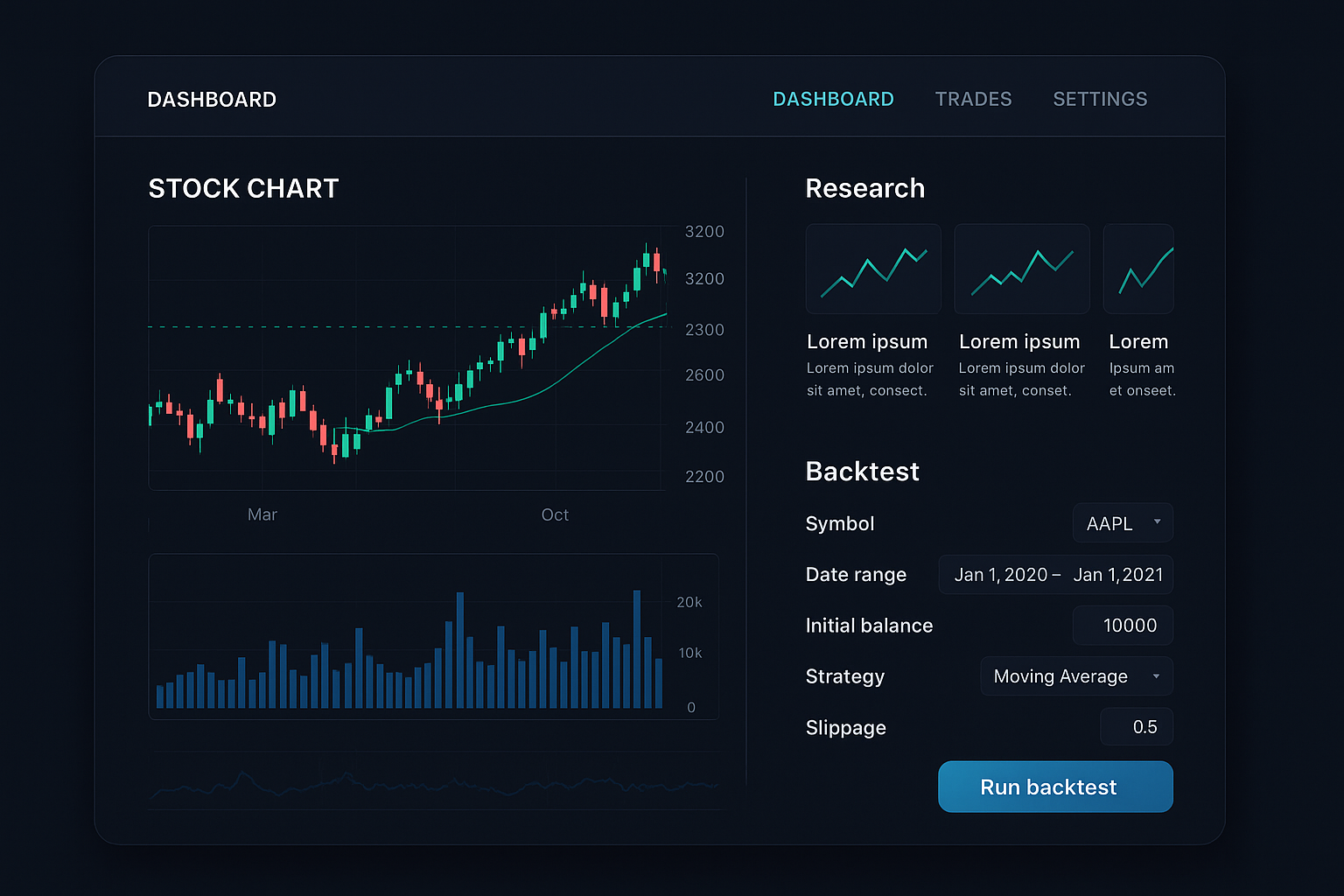
For decades, the best stock research lived behind a paywall most people never saw. Institutional terminals cost tens of thousands of dollars a year, came with training sessions, and were built for analysts who spent all day staring at multiple monitors. If you were a retail investor, your options were a handful of free screeners, a brokerage app, and whatever you could piece together from forums and financial news.
That gap is closing. A new generation of stock research platforms is combining the analytical depth that used to require an institutional budget with the simplicity individual investors actually want. The question isn't whether this shift is happening—it's how to tell which platforms are delivering real institutional-grade capability versus which ones are just repackaging the same basic charts with a fresh coat of paint.
What "Institutional-Grade" Actually Means
The phrase gets thrown around loosely, so it's worth being precise. Institutional research isn't about having more charts on screen. It's about three things:
- Depth of process — understanding not just what a stock's metrics are, but how an analyst arrived at a conclusion
- Systematic evaluation — testing an investment thesis against history before committing capital
- Signal tracking — knowing what sophisticated money is actually doing, not just what the headlines say
Legacy platforms deliver on all three, but they were built for professionals who use them eight hours a day and have a compliance department backing them up. Retail investors need the same rigor without the same overhead—in time, in cost, or in a learning curve that requires a certification.
Where Legacy Platforms Fall Short for Individual Investors
Institutional terminals were never designed with a part-time investor in mind. They assume you already know what a filing looks like, how to interpret a research trace, or how to structure a backtest from scratch. The tools are powerful, but the workflow is not built for someone checking their portfolio between meetings or after the kids are in bed.
The result is a strange irony: the best data in the world is often the hardest to actually use if you're not doing this full-time. Retail investors end up either overpaying for tools they use a fraction of, or underusing tools that could genuinely improve their decisions.
What Modern Stock Research Platforms Look Like Today
The better retail-focused platforms aren't trying to shrink a Bloomberg terminal down to a phone screen. They're rethinking the workflow around how individual investors actually research and decide. A few examples show what that looks like in practice.
Follow What Matters, Instantly
Research starts with attention—deciding what to keep an eye on. In a well-designed platform, that shouldn't require a separate step every time. On Compounder, whenever you spot a + Follow button on a stock card, sector card, or theme card—anywhere in the app—you can click it and immediately add that item to your Following list. You don't have to stop what you're doing, navigate to a separate page, and search for the ticker again. You see something interesting, you follow it, you keep moving. It's a small design choice, but it reflects a bigger principle: research tools should match the pace of how people actually browse and discover ideas, not force them into a rigid workflow.
Transparent Research You Can Audit
One of the biggest differences between institutional and retail research has always been transparency. Analysts at a fund can walk into a colleague's office and ask, "How did you get to this number?" Retail investors reading a stock tip online rarely get that chance.
A proper research detail page changes that. When you click into a completed research run from the Deep Research tab in your history, you land on a page titled with your original research question—not a generic report header. Below that, you get a full trace of the actual process: the steps taken to gather information, the sources and data collected along the way, the reasoning applied at each stage, and the findings that resulted. A simple "Back to history" link lets you return to your full research log at any point.
This matters because it turns AI-assisted research from a black box into something you can actually evaluate. You're not just getting a conclusion—you're getting the work shown, the same way you'd want it from a human analyst.
Test Before You Trust
Even the best research is just a hypothesis until it's been tested against history. That's where a backtesting tool earns its place in a serious stock research platform.
Compounder's Stock Strategy Backtester lets you configure and run historical tests of stock-selection strategies without needing to write code or build a spreadsheet model from scratch. You give your test a memorable name, then choose:
- Strategy type — Compounder Score top N%, Buffett quality scoring 70+, or Graham net-net undervalued
- Historical date range — a minimum of 90 days, so you can test across different market conditions
- Rebalance frequency — Monthly, Quarterly, or Yearly
- Percentage of universe — how selective the strategy should be
This is exactly the kind of systematic testing that separates disciplined investing from guesswork, and it's the sort of tool that used to require a quant team to build in-house. Being able to run it yourself, in minutes, is a genuine shift in what's accessible to individual investors.
How to Evaluate a Stock Research Platform
With so many stock research platforms marketing themselves as "AI-powered" or "institutional-grade," it helps to have a short checklist:
- Can you see the reasoning, not just the output? A conclusion without a visible process is a black box, no matter how confident it sounds.
- Can you test a strategy before trusting it? If a platform can't help you backtest an idea against history, you're investing on faith.
- Does it fit your actual routine? Following a stock, tracking a theme, or revisiting research should take seconds, not a multi-step process.
- Is the depth proportional to the price? Institutional-grade doesn't have to mean institutional-priced.
The Bottom Line
The gap between what institutions and individuals can access is narrowing, but not every platform closes it the same way. The ones worth paying attention to are the ones that combine real analytical rigor—transparent research traces, systematic backtesting, effortless tracking—with a workflow built for people who have a day job, not a Bloomberg desk. That's the actual promise of modern stock research platforms: not a smaller terminal, but a smarter one.